Canon R6 Mark III Review: A Non-Canon Shooter’s Honest Perspective
By Wesley | Wesley Street Shots
What’s up, everyone! Today let’s talk about the Canon R6 Mark III.
Now, I need to start with full disclosure: I haven’t owned a Canon body since the RP, and I’ve never owned a "pro" level Canon body. My thoughts today are coming from the perspective of someone who has spent the last few years shooting Sony, Nikon, Fuji, and even Leica.
But after testing this beast out in Phoenix and prepping for our trip to Singapore, I have to say—the R6 Mark III genuinely impressed me. Even when stacked up against heavy hitters like the Sony a7R V, the Nikon Z6 III, and the Z8, this camera holds its own.
Here is my honest, raw initial review of the Canon R6 Mark III.
The "Comparison" Trap
A lot of factors go into performance—lens choice, AF motors, lighting. It’s hard to compare cameras side-by-side unless you get super scientific with your tests. And honestly? I don’t have the gear, nor the passion, to be a lab technician.
But—and this is a big but—I’ve shot with the Nikon Z8, Z6 III, Zf, Sony a7R V, a7C, Fuji X-H2S, X-T5, Lumix S5II, and the Leica Q3. (Okay, you get the point).
Coming from that background, the Canon R6 III does more than enough for my needs. It has the autofocus, the burst speeds, and the fast read/write times, all while producing Raw images that are a joy to edit. While you can’t go wrong with any of the cameras I just listed, this one hits home for me in a few specific ways.
Let's break it down.
What I Like
There are a few features here that really set Canon apart right now.
1. The Ecosystem & Filter Standardization
Unlike Nikon, Sony, or Fuji, Canon is standardizing the filter sizes for their new lens lines. This includes the L-series VCM (Voice Coil Motor) primes like the 24, 35, 50, and 85mm. They are all identical in size and filter thread. Even the 28-70mm f/2.8 I’m using has that same 67mm filter size.
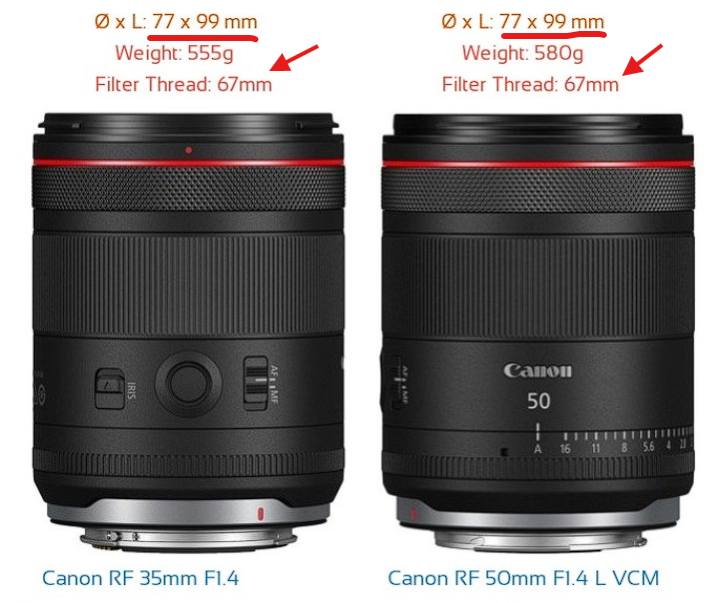
Credit: CameraDecision.com
This means I can use one variable ND filter (with my CPL and diffusion built-in) for all my Canon lenses. Boom!
Why this matters: If you use a gimbal, this is a massive workflow upgrade. You can swap lenses without rebalancing the entire rig.
2. The Menus
While they are deep, Canon's menus are incredibly intuitive. Coming from Nikon, Fuji, and Sony, Canon’s layout just makes sense. It took a minute to adjust, but I found myself navigating faster than when I first moved to the other systems. Leica is still the king of simplicity, but Canon is a solid second place for me.
3. Handling & Controls
I was pessimistic about the layout initially, but I actually prefer it over the Nikon or Fuji method.
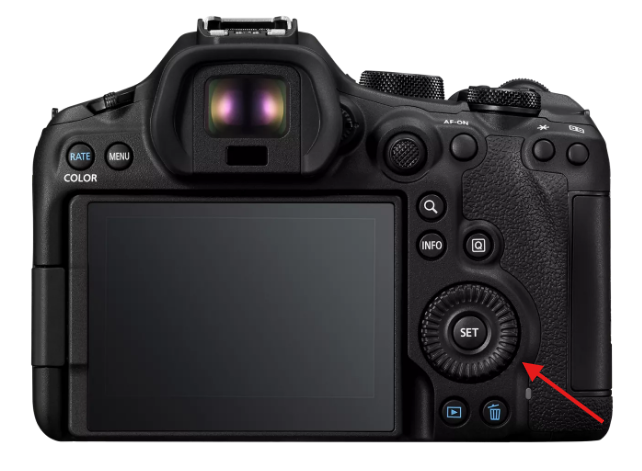
The Third Wheel: Canon gives you a third wheel on the back that you can map directly to ISO. This gives you total exposure triangle control without needing to hold a button while turning a dial.
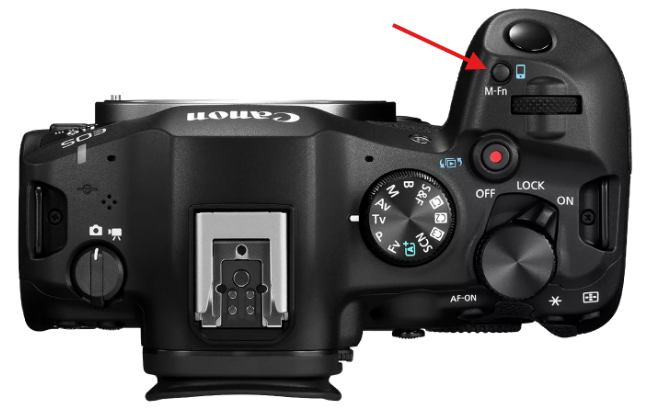
The M-Fn Button: Located near the shutter, this gives you instant access to metering, White Balance, AF drive, ISO, and burst speed—all without taking your eye away from the viewfinder.
4. The Little Things
Grip: Very comfortable.
Strap Lugs: They are recessed so they don’t poke you in the hand (looking at you, Nikon).
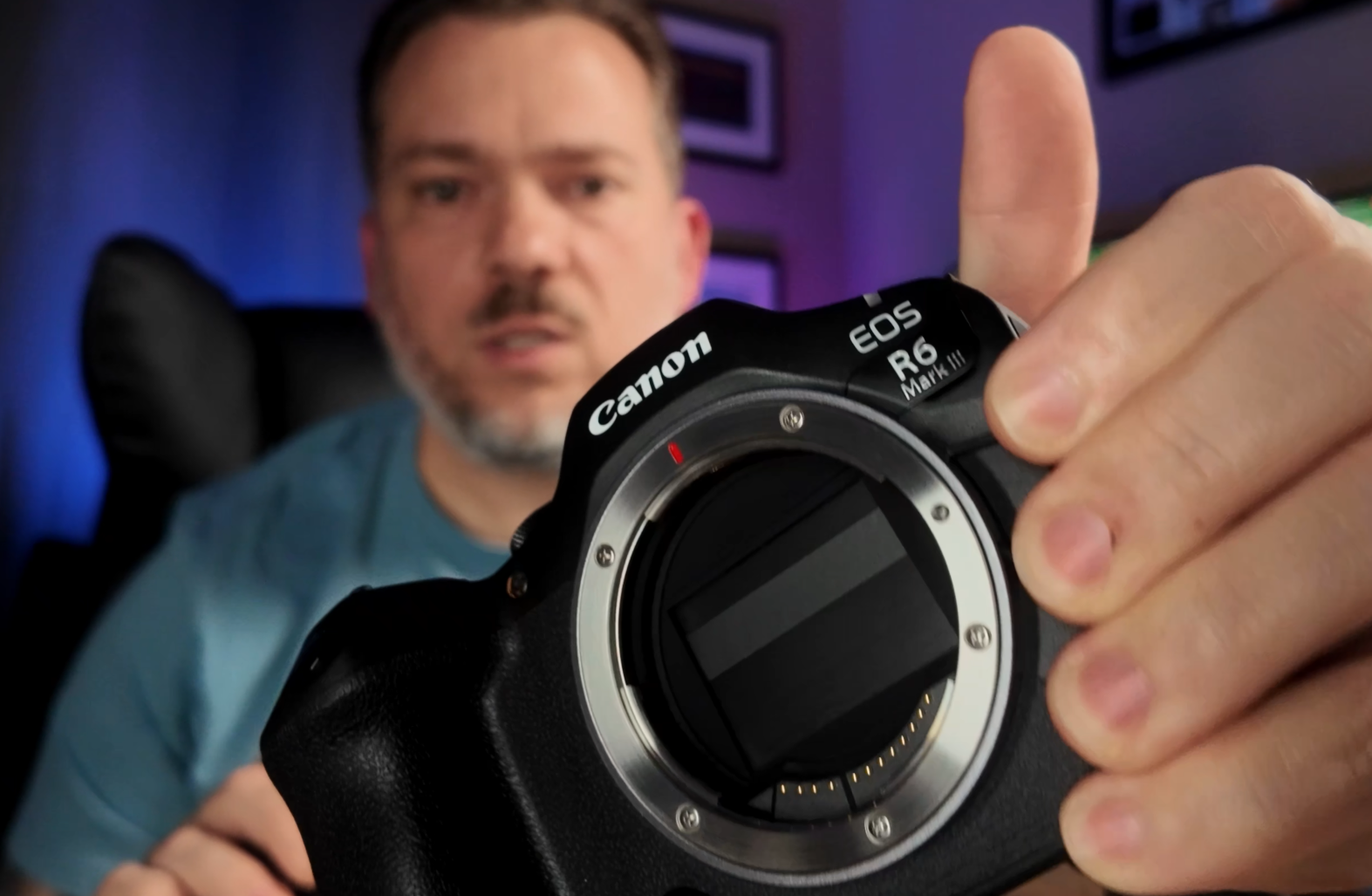
Sensor Guard: When you power down, a shutter guard closes to keep dust off the sensor.
What I Don’t Like (The Nitpicks)
There isn’t much I don’t like, to be honest. But I have a few nitpicks:
On/Off Switch: I wish they moved this to the shutter area or put the Photo/Video toggle under the mode dial like Sony does. The current placement feels a little clunky.
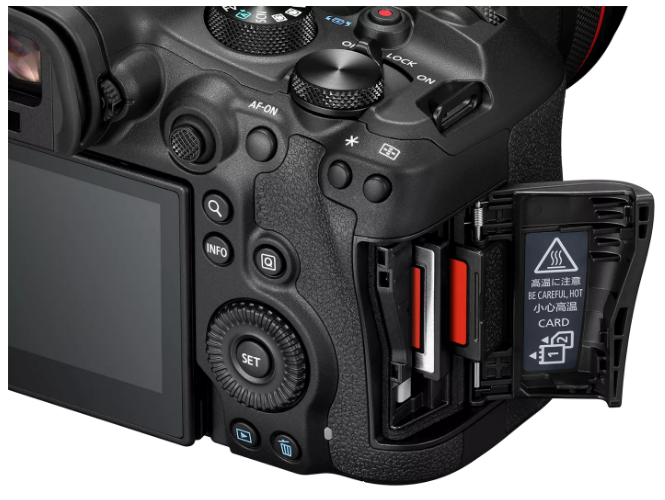
Memory Card Doors: I like the door placement, but the CFexpress slot uses a push-button release while the SD slot is spring-loaded. It’s a weird inconsistency.
But honestly? That’s all I’ve got.
Video Performance
Initial thoughts? Very positive. I’ve mostly been filming in the studio using C-Log 3, 4:2:2 10-bit, Long GOP, 4K 24p.
I’m not stressing the camera out, so I haven’t seen any overheat warnings. If you need 8K raw or unlimited recording in a desert, get a C70 or a Nikon Z8. But for the hybrid shooter, this is rock solid.
A few notes on settings:
Open Gate: This is available! It gives you All-Intra recording using the full height of the sensor (around 7K), but keep in mind it disables standard 4K MP4 options in the menu.
Slow Motion: To get 120p without it being greyed out, you need to switch to 4K-U or DCI, not "Fine."
Codecs: You can shoot Raw, H.265, and H.264, though settings are linked (e.g., to shoot outside Long GOP, you need H.264 4K Fine).
Stabilization Tests
I didn’t do a vlog test because I don’t think anyone in 2026 is vlogging with a heavy full-frame body. But for handheld B-roll, I tested this at 28mm and 70mm, shooting C-Log 3 at 24fps.
The Results:
Digital Stabilization: Honestly? Not worth the 10% crop. It didn't smooth things out enough to justify losing the resolution.
Focal Length: 28mm was obviously much more stable than 70mm.
The "Frame Rate Hack": The best way to get smooth handheld footage? Shoot at 60fps and slow it down to 24p in post. The 60p clips I took were excellent.
Static Shots: I noticed some micro-jitters when holding the camera perfectly still. If you are shooting a static shot handheld, turn IBIS off. On a tripod or gimbal, however, it’s flawless.
Market Comparison: It’s slightly better than the Nikon Z6 III, but nowhere near the Lumix S5II. Sony sits tied for third with Nikon.
Final Thoughts
So, what’s the verdict?
The Canon R6 Mark III is a fantastic hybrid camera. It trades blows with the Z6 III, but Canon takes the edge for me thanks to the forward-thinking lens design for gimbal use and that incredible button layout. It takes great photos, has class-leading autofocus, handles beautifully, and produces lovely video.
All the brands are making amazing gear right now. But if you’ve been eyeing the R6 III and you're on the fence? Just get it. You won’t regret it.
Check out the full visual review on my YouTube Channel and don't forget to subscribe!